
Why Alignment Alone No Longer Defines Excellence in Anterior Esthetics
Anterior esthetics has always been central to dentistry. Long before digital photography, intraoral scanners, and social media, clinicians studied tooth proportions, gingival harmony, and smile dynamics to create results that looked natural and timeless.
What has changed is the margin for error.
We now practice in a high-definition world—one defined by megapixel cameras, macro lenses, digital smile design software, and patients who routinely view their smiles magnified on screens. Subtle discrepancies that once went unnoticed are now immediately visible. As a result, delivering truly excellent anterior esthetic outcomes requires a level of precision, intention, and interdisciplinary awareness that goes far beyond “straight teeth.”
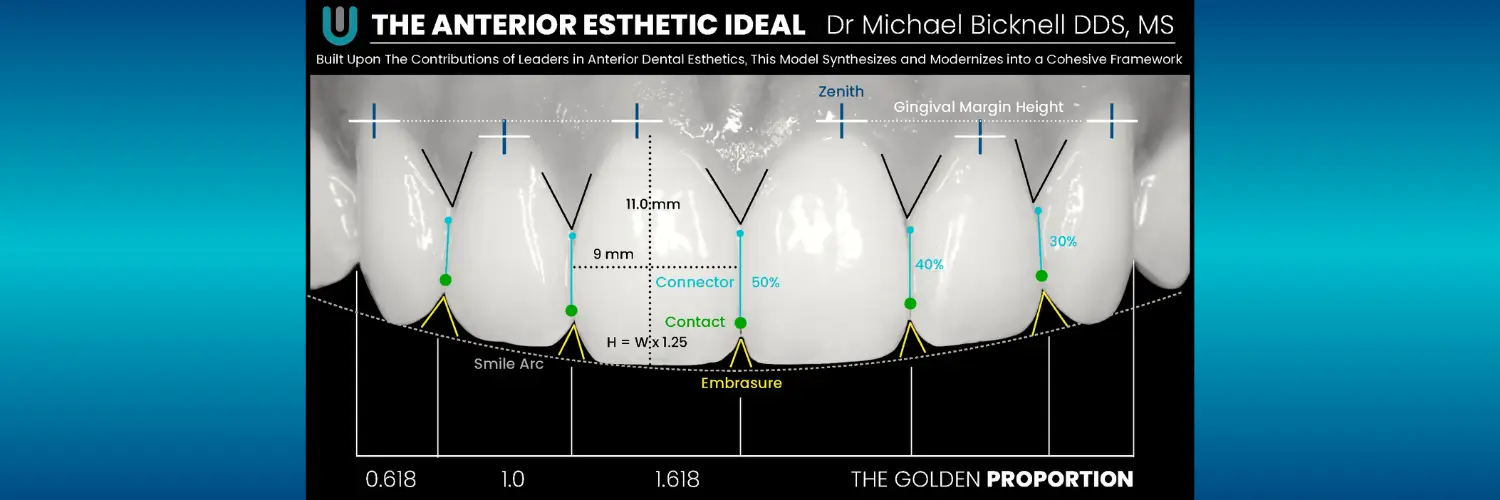
The UOA Anterior Esthetic Ideal was created by Dr. Michael Bicknell in response to this reality.
Rather than replacing classic esthetic principles, this framework modernizes and integrates them—bringing together foundational concepts from prosthodontics, periodontics, and orthodontics into a single, visual, clinically actionable model for today’s practitioners.
A Unified Framework for Modern Anterior Esthetics
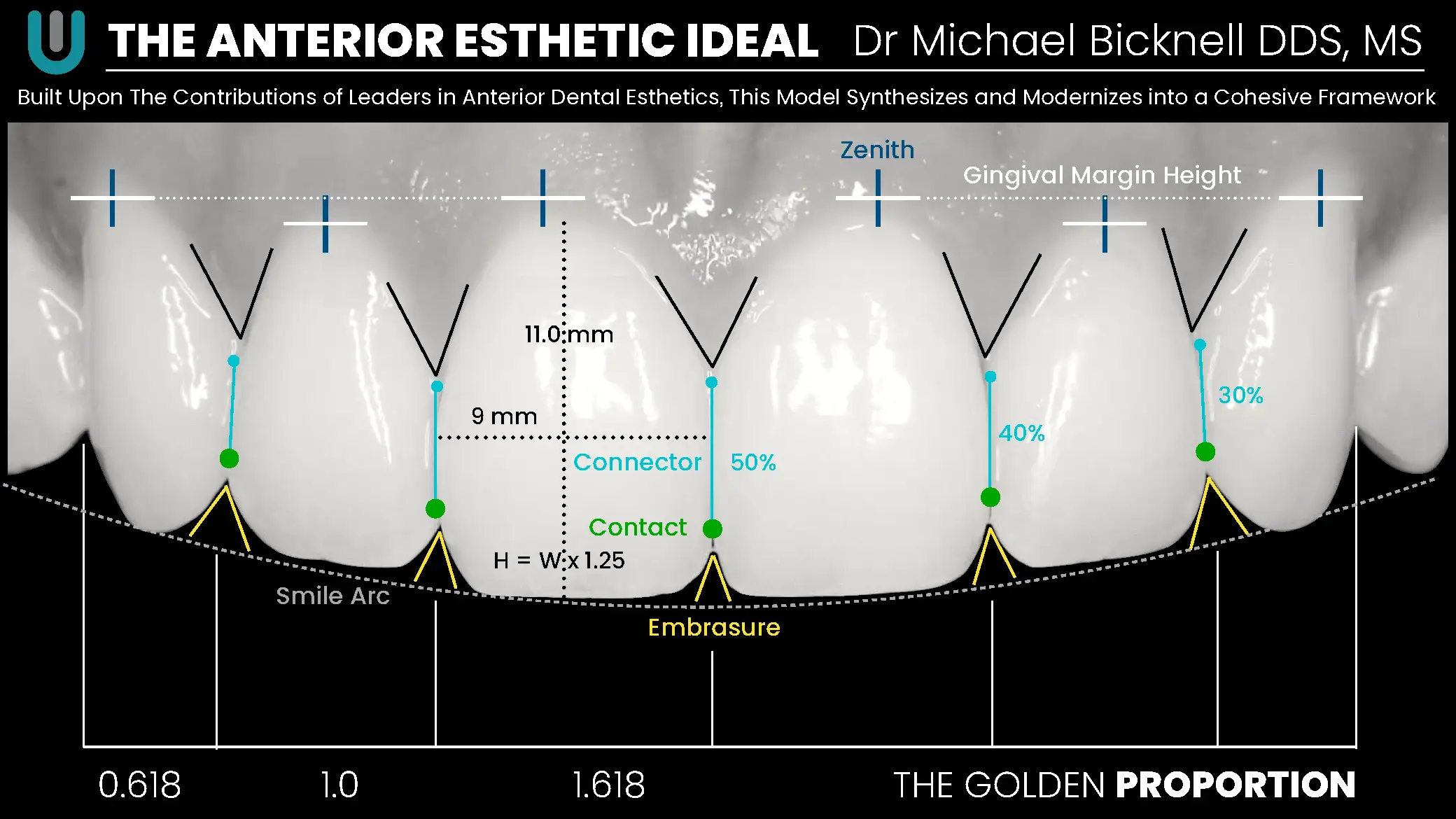
The Anterior Esthetic Ideal captures the key components that define an ideal anterior segment and organizes them in a way that reflects how clinicians must diagnose, plan, and execute treatment in contemporary practice.
1. Embrasures
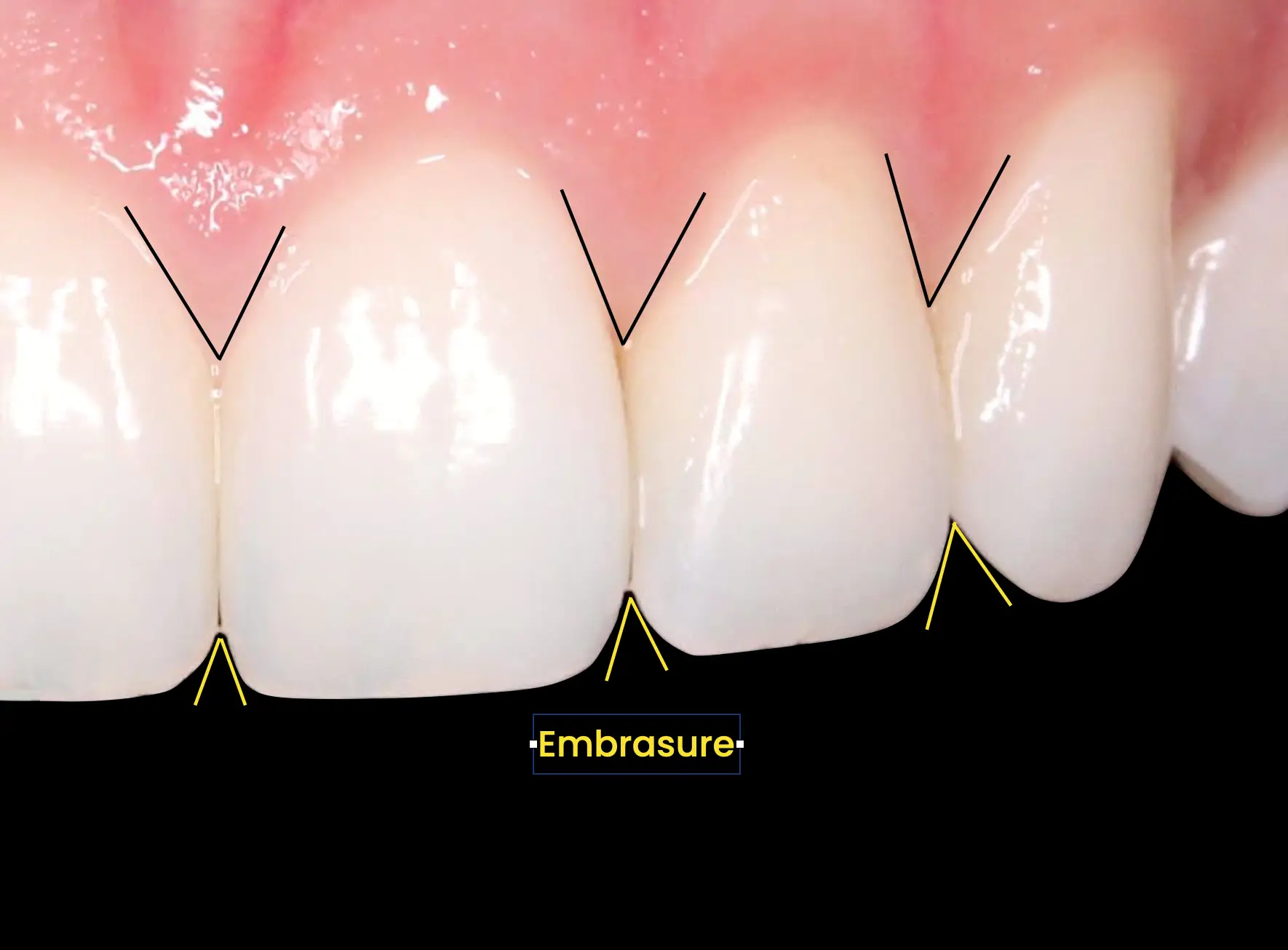
Progressive embrasure depth is essential for creating tooth individuality, natural light reflection, and visual separation between teeth. Proper embrasure form must be evaluated in all three planes of space—not just from a frontal view. Flattened or inconsistent embrasures are a common giveaway of over-finished orthodontic or restorative cases and become especially obvious in high-definition photography.
2. Contact Positions and Connector Lengths
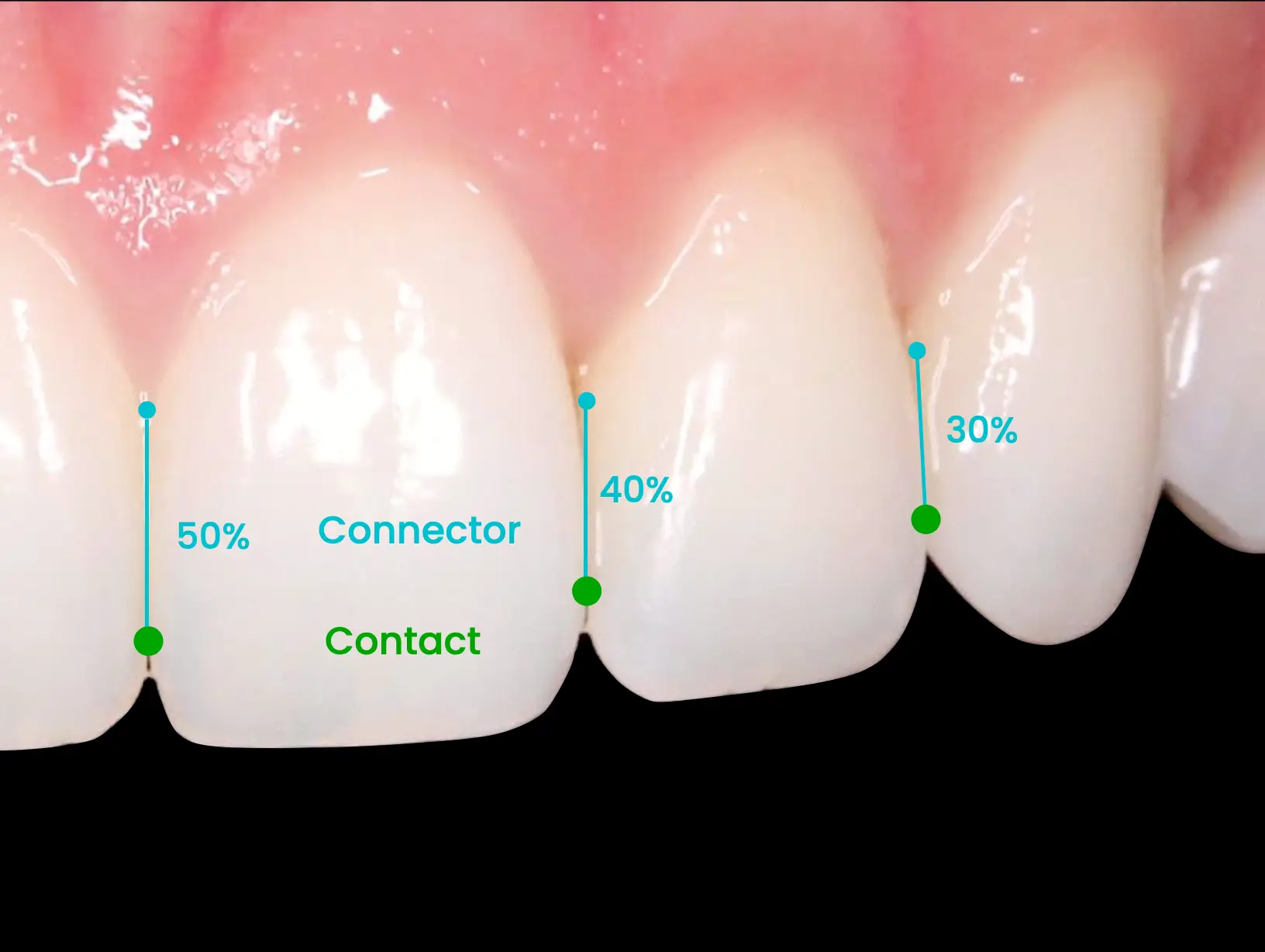
Apical progression of contact points and connector lengths—classically described as 50%–40%–30% from central incisors to canines—is critical for avoiding black triangles while maintaining esthetic tooth separation. This balance is particularly important in adult orthodontic patients, where papilla fill and periodontal limitations must be respected.
3. Tooth Width-to-Height Proportions
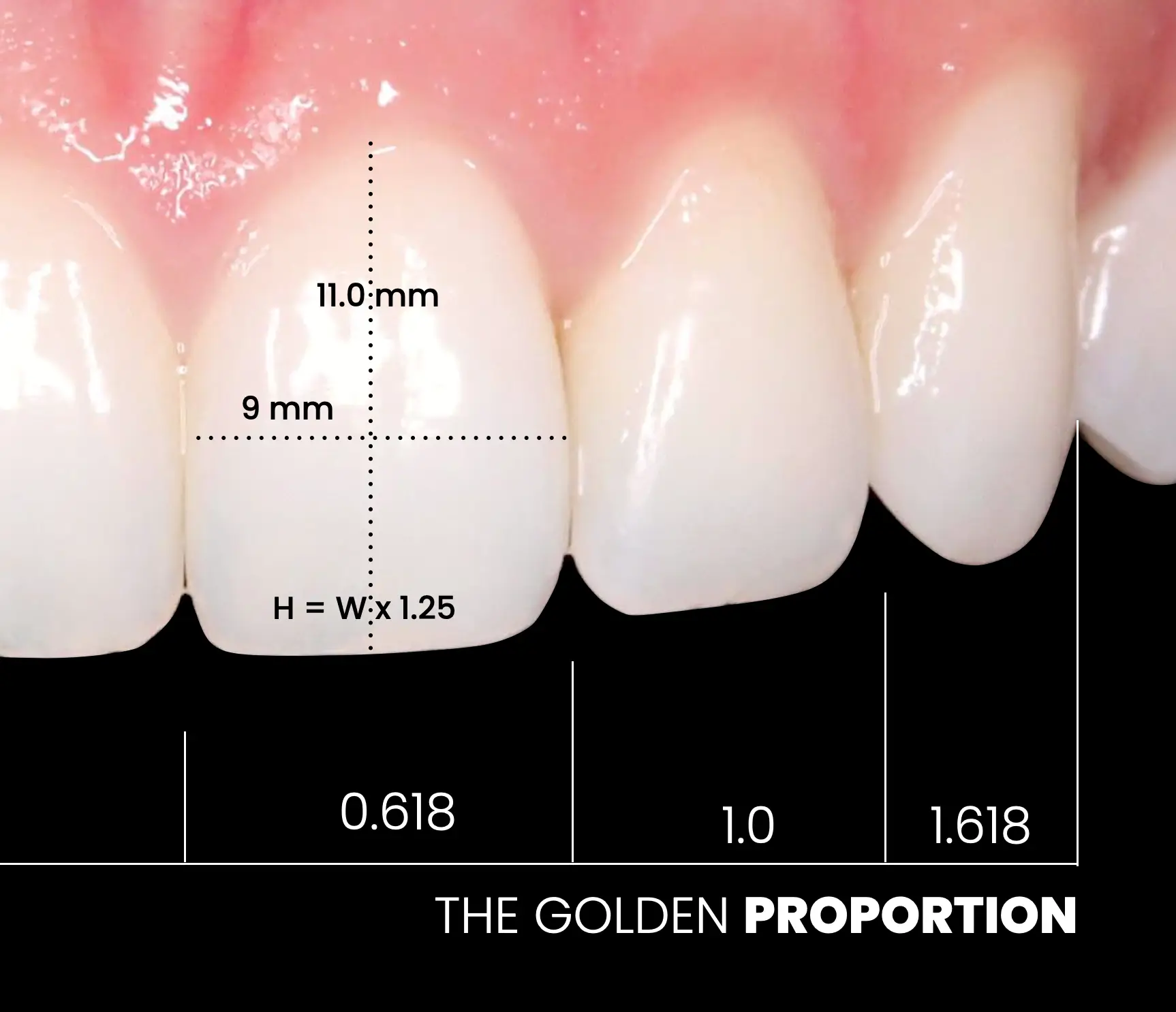
Classic proportional concepts such as the golden proportion and recurring esthetic dental proportion (RED) have value—but only when applied flexibly. The Anterior Esthetic Ideal emphasizes adapting width-to-height ratios to the individual patient’s facial structure, lip dynamics, and smile display rather than rigidly following formulas that ignore biologic and esthetic variability.
4. Smile Arc
A consonant smile arc—where the incisal edges follow the curvature of the lower lip—is one of the most powerful drivers of perceived attractiveness. Achieving this requires intentional vertical tooth positioning, thoughtful bracket placement or aligner staging, and awareness of incisal edge design. Smile arc is not something that “happens” at the end of treatment; it must be planned from the beginning.

5. Gingival Zenith Location
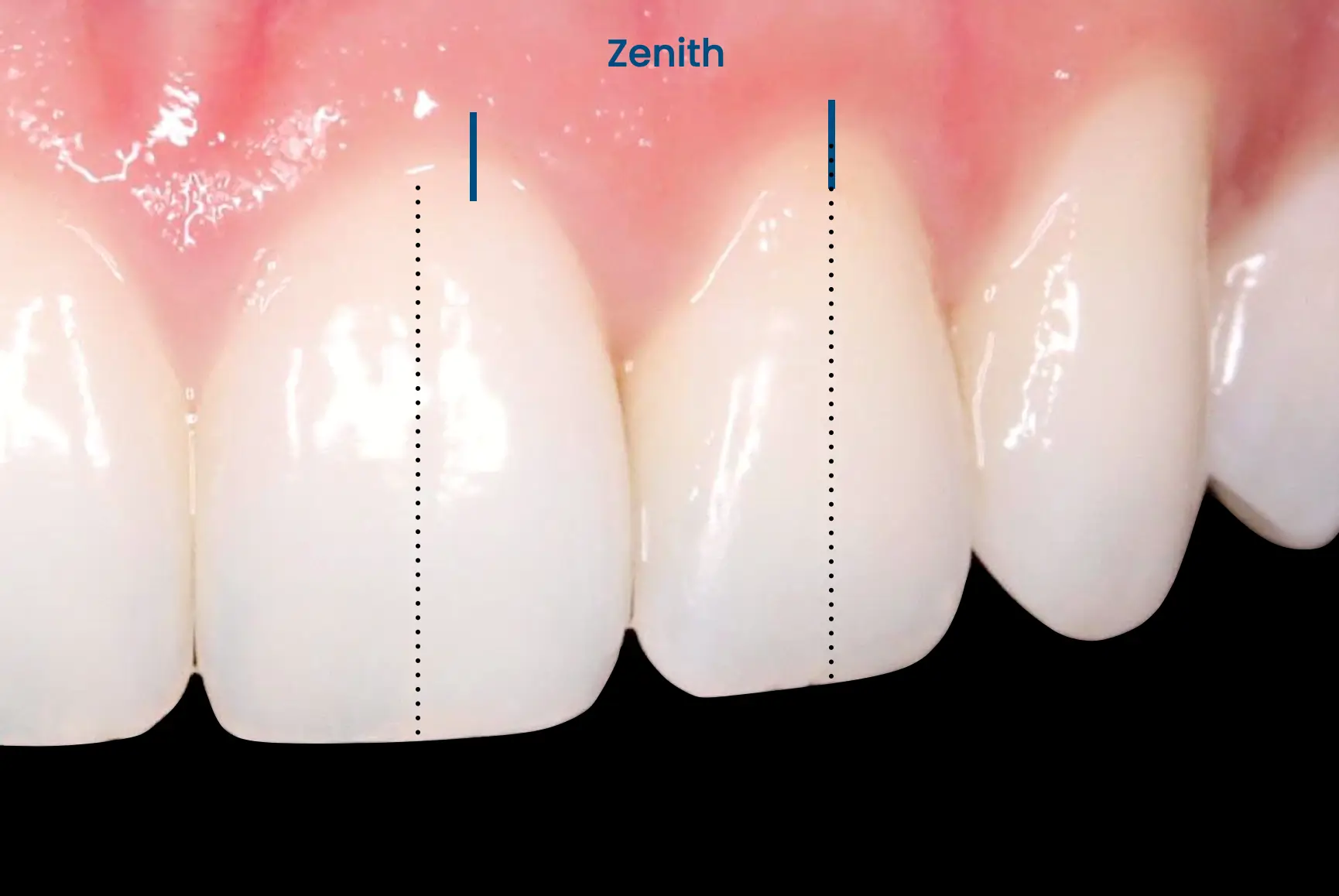
Proper gingival zenith positioning—slightly distal to the tooth midline for maxillary centrals and canines—reinforces natural asymmetry and visual harmony. Centered or overly symmetric zeniths often appear artificial, especially in high-smile patients.
6. Relative Gingival Heights
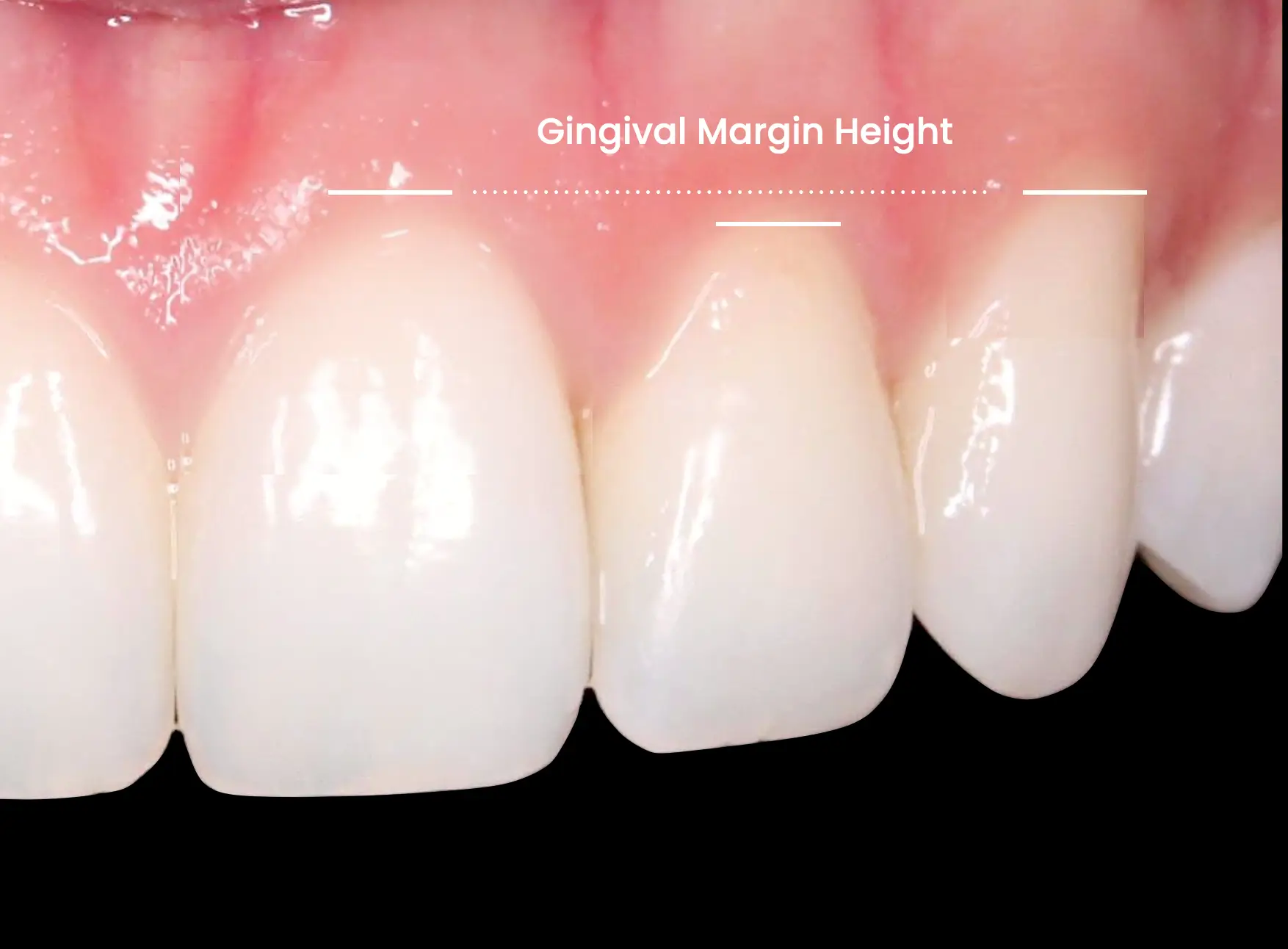
The gingival margin relationships between central incisors, lateral incisors, and canines play a critical role in anterior esthetics. Ideally, centrals and canines share similar gingival heights, with laterals positioned slightly more incisally. Deviations from this pattern can dramatically impact smile balance and are frequently magnified in digital images.
Why Anterior Esthetic Precision Matters More Than Ever
Twenty years ago, many of these details could be overlooked without significant consequence. Today, they cannot. Modern orthodontics and restorative dentistry demand:
- Highly precise bracket placement or digitally driven aligner setups
- Mastery of three-dimensional tooth positioning for smile arc, embrasures, and proportions
- Artistic enamel recontouring to refine tooth shape and contact relationships
- Soft-tissue sculpting using contemporary laser technology
- A trained esthetic eye that evaluates the entire smile composition—not just alignment
Patients now expect outcomes that are not only functional, but photogenic, balanced, and long-lasting. Achieving this level of excellence requires interdisciplinary communication, intentional sequencing, and a deep respect for biologic limits.
Interdisciplinary Awareness Is No Longer Optional
The Anterior Esthetic Ideal reinforces a critical truth: anterior esthetics does not belong to a single specialty.
Orthodontists influence gingival display, tooth proportions, and smile arc. Periodontists shape the gingival frame. Restorative dentists refine contours, embrasures, and surface texture. When these disciplines work in isolation, esthetic compromises occur. When they work from a shared framework, outcomes elevate dramatically.
This is where modern continuing education becomes essential—not just learning new tools, but learning how classic principles apply in today’s digital, interdisciplinary environment.
Honoring the Foundations While Advancing the Conversation
This framework stands firmly on the shoulders of giants.
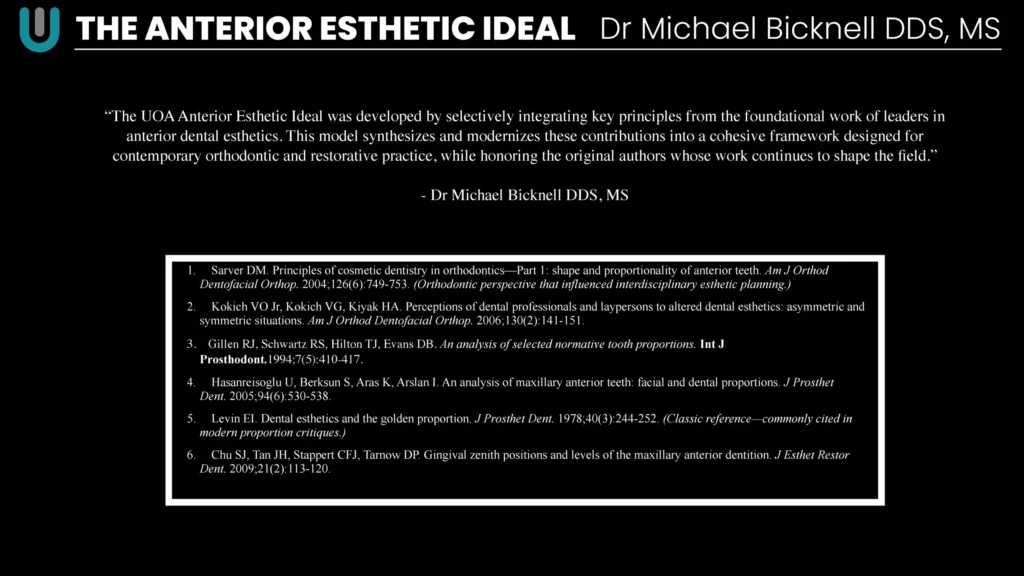
The work of Sarver, Kokich, Gillen, Hasanreisoglu, Levin, Chu, and many others established the principles that continue to guide anterior esthetic excellence across specialties. Their contributions remain foundational and irreplaceable.
The UOA Anterior Esthetic Ideal does not claim ownership of these ideas. Instead, it brings them together—clearly, visually, and cohesively—so they can be more easily taught, communicated, and applied in contemporary clinical practice.
Anterior Esthetics Refined for the Modern Era
In a world where every smile is viewed in high definition, excellence is no longer defined by alignment alone. It is defined by proportion, harmony, tissue health, and intention.
The Anterior Esthetic Ideal provides a modern lens through which classic principles can continue to thrive—helping dental professionals deliver outcomes that are not only beautiful, but precise, predictable, and timeless.
Dentofacial Esthetics: From Macro to Micro – David M. Sarver, DMD, MS